A Cardiff business can lose work long before anyone picks up the phone. A slow homepage, unclear messaging, awkward mobile layout or dated visuals can make a capable company look smaller, less credible or harder to trust than it really is. That is why website design in Cardiff is not just about appearance. It is about whether your site helps people understand what you do, believe you can deliver it, and take the next step without friction.
For some businesses, that means a sharp brochure site that brings in enquiries. For others, it means a faster marketing site, a customer portal, an internal dashboard or a site connected to booking, billing and lead handling. The right build depends on what the website needs to do after launch, not just how it looks on handover.
Why website design in Cardiff needs a business-first approach
Cardiff has a wide mix of businesses competing for attention - local trades, agencies, hospitality, legal firms, clinics, property companies, software startups and established service brands. They do not all need the same kind of website, and that is where many projects go off course. A template that suits a café will not suit a B2B consultancy. A stylish homepage is not enough if the back end is awkward to update or the conversion path is weak.
Good web design starts with the commercial goal. If the site is meant to generate leads, the layout, copy structure, calls to action and page speed need to support that. If the goal is to sell, book, onboard or automate, the site needs proper technical planning from the start. Design decisions should follow the workflow, not fight against it.
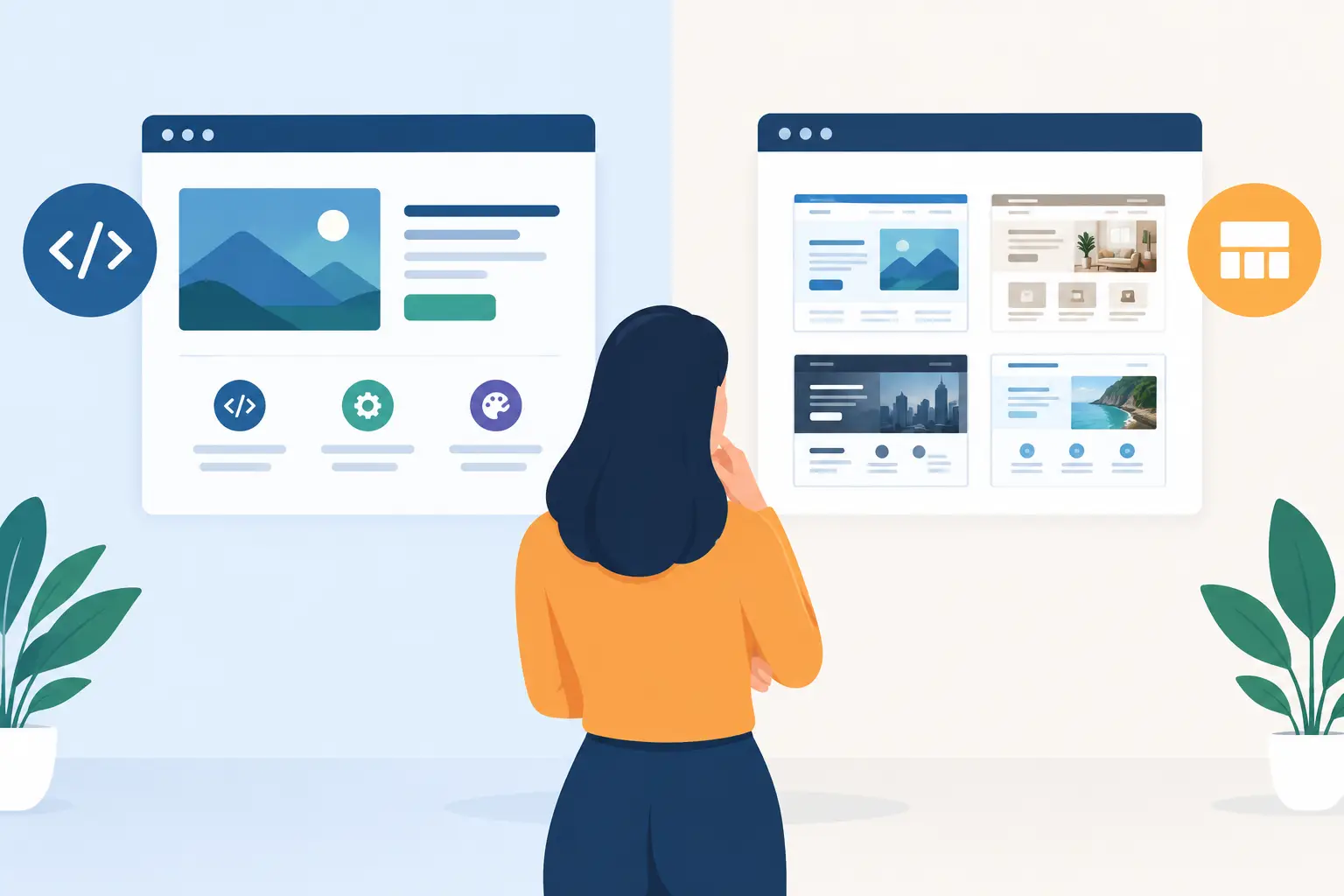
This is also where having one partner who can design and build is useful. The handover between designer and developer is often where detail gets lost. Interactions change, layouts break, performance drops and practical requirements get bolted on later. An end-to-end approach tends to produce cleaner outcomes because the design is shaped around real implementation from day one.
What a strong Cardiff website should actually do
A good site should make the next action obvious. That sounds simple, but many websites still bury contact options, overload the page with generic copy or force users to hunt for basic information. If someone lands on your site, they should quickly understand your offer, who it is for, and what happens next.
That usually means tighter page structure, clearer hierarchy and better restraint. Not every page needs motion, sliders or oversized sections. In many cases, simpler design performs better because it removes hesitation. If a user can scan your service, see relevant proof, and contact you within seconds, the site is doing its job.
Performance matters as well. Slow websites create doubt. They reduce conversions, make advertising less efficient and frustrate visitors on mobile. In practical terms, speed depends on how the site is built - image handling, scripts, caching, hosting setup and front-end decisions all play a part. A polished visual design loses value quickly if the experience feels sluggish.
Then there is content management. Many businesses in Cardiff do not need a huge CMS with dozens of moving parts. They need something reliable that lets them update key pages, publish news if needed, and stay in control without breaking the site. The right setup should match the team using it. There is no point building a technically impressive system if every small edit becomes a chore.
Design choices that affect trust
Trust is built through dozens of small decisions. Spacing, typography, colour use, image quality, mobile responsiveness and copy tone all shape how credible a business feels online. People rarely analyse those elements one by one, but they notice the overall standard immediately.
For Cardiff firms serving local customers, trust often comes from clarity and relevance. Real project imagery, straightforward service pages, location signals, testimonials and sensible contact routes usually do more than flashy visuals. For startups or SaaS businesses, trust may come from product clarity, technical polish, onboarding flow and consistent interface design across marketing pages and the app itself.
The trade-off is that highly customised design takes more time than dropping content into a pre-made theme. Sometimes that extra investment is justified because the website is central to sales. Sometimes it is not. A local business with a simple service offer may be better served by a lean, carefully built site with strong fundamentals rather than an over-designed build that adds cost without improving results.
Website design in Cardiff for growth, not just launch day
A site should not be judged only by how it looks when it goes live. The better question is whether it can support the next stage of the business. Can you add landing pages easily? Can it connect to your CRM, forms, analytics, payments or booking systems? Can it handle content growth, new services or additional functionality without needing a rebuild six months later?
This is where technical planning matters. A brochure site for a small firm may only need clean page templates, fast load times and a reliable contact flow. A more advanced business may need gated content, account areas, Stripe billing, Supabase-backed data, API integrations or a dashboard for internal operations. Those requirements should shape the architecture early.
There is also a common mistake in treating every business site as a marketing site only. In reality, websites often sit at the centre of operations. They can qualify leads, trigger automations, collect customer information, route enquiries to the right place and reduce admin work. When that is considered at the design stage, the website becomes more than a digital brochure.
What to look for when hiring a web designer in Cardiff
The strongest option is usually someone who asks practical questions before discussing visuals. What does the business need the website to achieve? What systems does it need to connect to? Who updates it after launch? What does success look like in six months?
You should also look for proof of delivery, not just mock-ups. A nice portfolio matters, but shipped work matters more. Real sites, live products, working integrations and examples of different project types say more than abstract claims about creativity. If a freelancer or studio can talk clearly about deployment, analytics, forms, performance, content structure and ongoing support, that is a good sign they understand the full job.
Responsiveness matters too. One advantage of working with a capable freelance partner is direct communication. Fewer layers, quicker decisions and better continuity from first call to go-live can make the process far smoother. That is especially valuable for founders and business owners who do not want to manage a designer, a developer and a separate technical lead just to get a website launched properly.
A business like Zak Furness is a good example of that end-to-end model - design, development, integrations and launch support handled as one joined-up process rather than split across multiple suppliers.
Common problems with underperforming websites
Most weak sites are not failing because of one dramatic issue. It is usually a pile-up of smaller problems. The message is vague. The design feels dated. Mobile spacing is clumsy. The forms ask too much. The pages load too slowly. The site looks acceptable from a distance, but it creates friction at every step.
Another frequent problem is building for internal preferences instead of user behaviour. Businesses often want to say everything at once, which leads to crowded pages and diluted calls to action. Good design is partly about editing. The site needs enough information to build confidence, but not so much that visitors lose the thread.
There is also the issue of future maintenance. Some websites launch with too many plugins, fragile page builders or awkward custom workarounds. They look fine initially, then become difficult to update, inconsistent across pages or prone to breakage. A cleaner build usually saves time and cost later.
Choosing the right level of build
Not every project needs a large custom platform. That is worth saying because overbuilding is as unhelpful as underbuilding. If you run a local service business and need a modern website that explains your offer, ranks well, loads quickly and brings in enquiries, the best answer may be a focused custom site with a sensible content structure and solid technical foundations.
If you are running a startup, managing subscriptions, launching a SaaS product or building an internal tool, your requirements are different. In that case, design needs to consider user states, data models, authentication, payments and long-term product decisions. It is still website design, but it sits much closer to product development.
The best projects are honest about where they sit on that scale. That keeps budgets realistic, avoids unnecessary complexity and gives you a site that fits the business now while leaving room to grow.
A well-built website should make your business easier to trust, easier to contact and easier to run. If it does that quietly and consistently, it is doing far more than filling space online.