A small business website designer should do more than make your site look presentable. If your website is slow, hard to update, unclear on mobile, or built without any thought for enquiries and sales, it quietly costs you work every week.
That is usually the real issue. Most small businesses do not need a flashy build or a bloated package. They need a website that reflects the brand properly, loads quickly, explains the offer clearly, and gives people an easy next step - whether that is calling, booking, buying or sending an enquiry.
What a small business website designer should actually do
The job is part design, part technical delivery, and part business thinking. A good small business website designer is not just choosing fonts and moving boxes around a screen. They are shaping how your business is presented online and making sure the site works properly once it is live.
That includes the obvious things, such as layout, branding, mobile responsiveness and page structure. It also includes the less visible parts that affect results: page speed, contact form reliability, analytics setup, basic search visibility, clean content management, image handling, and sensible calls to action.
For some businesses, that scope goes further. You might need online payments, a customer portal, booking flows, gated content, lead routing, or integrations with Stripe, Google services, a CRM or your internal admin process. At that point, hiring someone who can both design and build becomes far more valuable than hiring a designer who stops at mock-ups.
Why many small business websites underperform
Most underperforming sites have not failed because the owner did not care. They usually failed because the project was scoped too narrowly.
A designer was hired to make it look better, but no one thought carefully about what the business actually needed from the site. Or a cheap template was pushed live quickly, then left untouched for years. Or the build was handed between different people - designer, developer, SEO freelancer, hosting support - with no one owning the full result.
That creates familiar problems. The design looks decent, but the site is difficult to edit. The pages rank for nothing useful. Mobile spacing is awkward. Forms break and no one notices. Load times drift. Tracking is missing. New services get added as an afterthought, so the site becomes cluttered and inconsistent.
A small business website is often a sales tool, a trust signal, and an operations touchpoint all at once. Treating it as a one-off visual task usually leads to weak results.
How to assess a small business website designer
The best way to assess fit is to look beyond style alone. A polished portfolio matters, but it should not be the only thing you judge.
Look at how the work is structured. Are the websites easy to scan? Do they explain the client’s offer clearly? Do they feel credible on mobile as well as desktop? Is there evidence the designer understands real business use cases, not just brochure layouts?
Then look for technical judgement. A capable freelance partner should be comfortable talking about hosting, performance, CMS options, integrations, analytics, deployment and post-launch changes in plain English. You do not need a lecture on infrastructure, but you do need confidence that the site will be built properly, not just made to look good in a design file.
Communication matters just as much. Small business owners rarely want to manage three separate specialists. They want one person who can advise on structure, make sensible recommendations, build the thing, and support launch without disappearing.
If the conversation stays vague, that is usually a warning sign. Strong freelancers tend to be specific. They can explain what they will deliver, how the build will work, what platform fits the project, and what trade-offs come with each option.
Questions worth asking before you hire
Ask how they approach content structure. A well-designed site starts with hierarchy and messaging, not decoration.
Ask what platform they recommend and why. Sometimes WordPress is the right choice. Sometimes a custom build is better. Sometimes a lightweight marketing site is enough. The right answer depends on who will manage the site, what features are needed, and how much flexibility you want later.
Ask who handles development, launch and support. If you are speaking to a freelancer, it helps to know whether they ship end to end or subcontract key parts elsewhere.
Ask how they think about speed, analytics and conversions. You are not looking for buzzwords. You are looking for practical answers that show they understand what happens after the homepage is approved.
Cheap websites are not always cheap
Price matters, especially for smaller firms. But the cheapest quote often becomes the most expensive once fixes, rebuilds and lost time are accounted for.
A low-cost site may use a rigid theme, overloaded plugins, poor hosting, and generic copy structure that does not fit your business. It can still look acceptable at first glance. The problem shows up later when you try to update services, improve rankings, add tracking, connect systems, or fix odd layout issues across devices.
That does not mean every business needs a custom-coded site from day one. Plenty do well with a lean, focused build. The key difference is whether the project is being scoped around your actual needs or sold as a pre-packed commodity.
If your website only needs to establish credibility, explain services and collect enquiries, the build can stay relatively simple. If the site also needs to support bookings, payments, dashboards, logged-in areas or workflow automation, the wrong shortcut creates technical debt quickly.
Design and development work better together
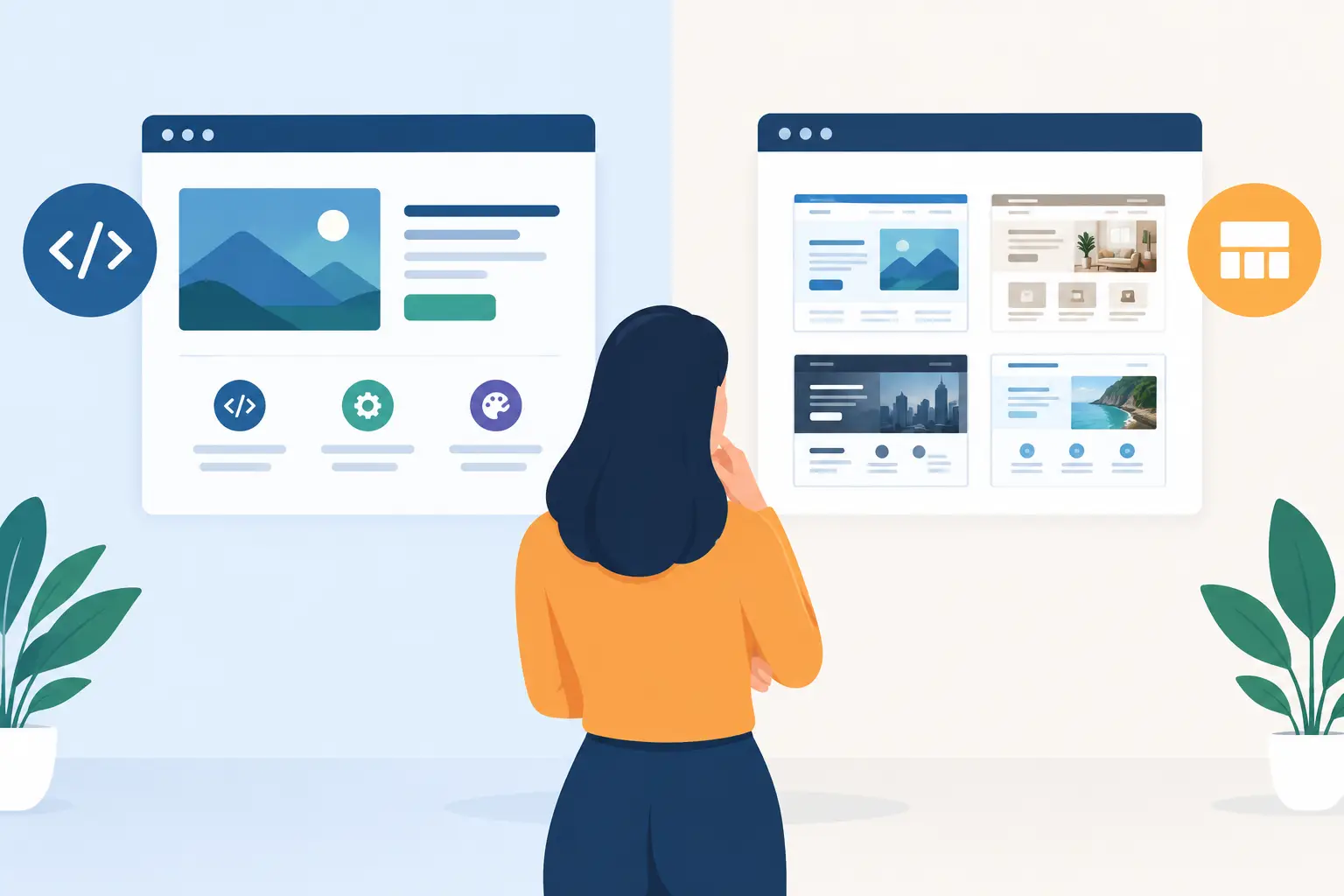
This is where many small businesses get caught out. They hire a designer for visuals and assume a developer can implement everything later without compromise.
In reality, design choices affect performance, content editing, user flow and feature complexity. Development choices affect what is practical, scalable and maintainable. When one person or one tightly managed process handles both sides, decisions get made earlier and with fewer surprises.
That is especially useful for businesses that want more than a basic brochure site. If your project may grow into a portal, internal tool, browser-based workflow, or lightweight SaaS product, it helps to work with someone who can start with a polished marketing site and build further when needed.
That kind of continuity saves time. It also means your website is not being rebuilt from scratch every time the business adds a new service line or digital product.
What the right website should deliver
A strong small business site does a few things very well. It makes the business look credible. It explains what you do without forcing people to work it out. It works properly on mobile. It gives clear routes to enquire or buy. And it is easy enough to maintain that the site does not become stale after launch.
The exact shape depends on the business. A local service company may need focused landing pages, testimonials, location relevance and a straightforward quote flow. A startup may need sharper product messaging, waitlist capture, analytics, billing integration and room to expand. A growing operator may need all of that plus internal dashboards or automation behind the scenes.
That is why cookie-cutter advice only gets you so far. Good website work is context-specific. The right designer will help you keep the build proportionate while still planning sensibly for what comes next.
When a freelance partner makes sense
For many small businesses, a freelance specialist is the best fit. You get direct communication, faster decisions, and the person you speak to is often the person doing the work. That tends to reduce friction and improve accountability.
It works particularly well when the freelancer can cover design, front-end build, back-end requirements, integrations and launch support in one service. Instead of acting as a middleman between separate teams, they can move the project forward in a joined-up way.
That is the advantage of working with someone like Zak Furness. The value is not just a cleaner website. It is having one reliable partner who can handle design direction, development, integrations, deployment and the practical details that make a site genuinely useful once it is live.
The best hire is usually the clearest one
The right small business website designer will not overwhelm you with jargon or sell a bigger build than you need. They will ask sensible questions, spot gaps early, and recommend a route that fits your budget, timeline and goals.
A good website should make your business easier to trust and easier to buy from. If a designer can help you do that with clarity, care and solid technical delivery, you are not just paying for pages on a screen. You are investing in infrastructure your business can actually use.