A cheap website is rarely cheap for long. If your site is slow, hard to update, awkward on mobile or stitched together with plugins you do not really control, the real cost shows up later in missed enquiries, admin headaches and rebuilds you did not plan for. That is usually the point where people start looking for a web developer Wales businesses can rely on - not just someone to make pages look better, but someone who can build the right thing properly.
For most businesses, the decision is not really about hiring a developer. It is about choosing a delivery partner who can understand the commercial job the website or product needs to do. That might mean a fast brochure site that brings in leads, a customer portal tied into billing, an internal dashboard that cuts manual work, or a browser extension that supports a specific workflow. The right fit depends on what you are trying to achieve, how complex the build is, and how much risk you want to carry after launch.
What a web developer in Wales should actually help with
A good web developer in Wales should do more than code what is written in a brief. At a minimum, they should be able to spot gaps before those gaps become delays. If your project needs authentication, payments, analytics, performance work, SEO foundations, forms that actually deliver, or integrations with platforms such as Stripe, Supabase or Google APIs, that should be considered early rather than bolted on at the end.
This matters because many projects fail quietly. They launch looking acceptable, but behind the scenes the content management is clumsy, the site speed is poor, forms are unreliable, or nobody has thought about what happens when traffic picks up. A polished homepage is useful, but if the build does not support the day-to-day running of the business, it starts to work against you.
That is why end-to-end delivery is worth paying attention to. When one person can handle design direction, front-end development, back-end logic, integrations, deployment and go-live support, there are fewer handovers and fewer assumptions. You get a clearer route from idea to launch.
Not every project needs the same kind of developer
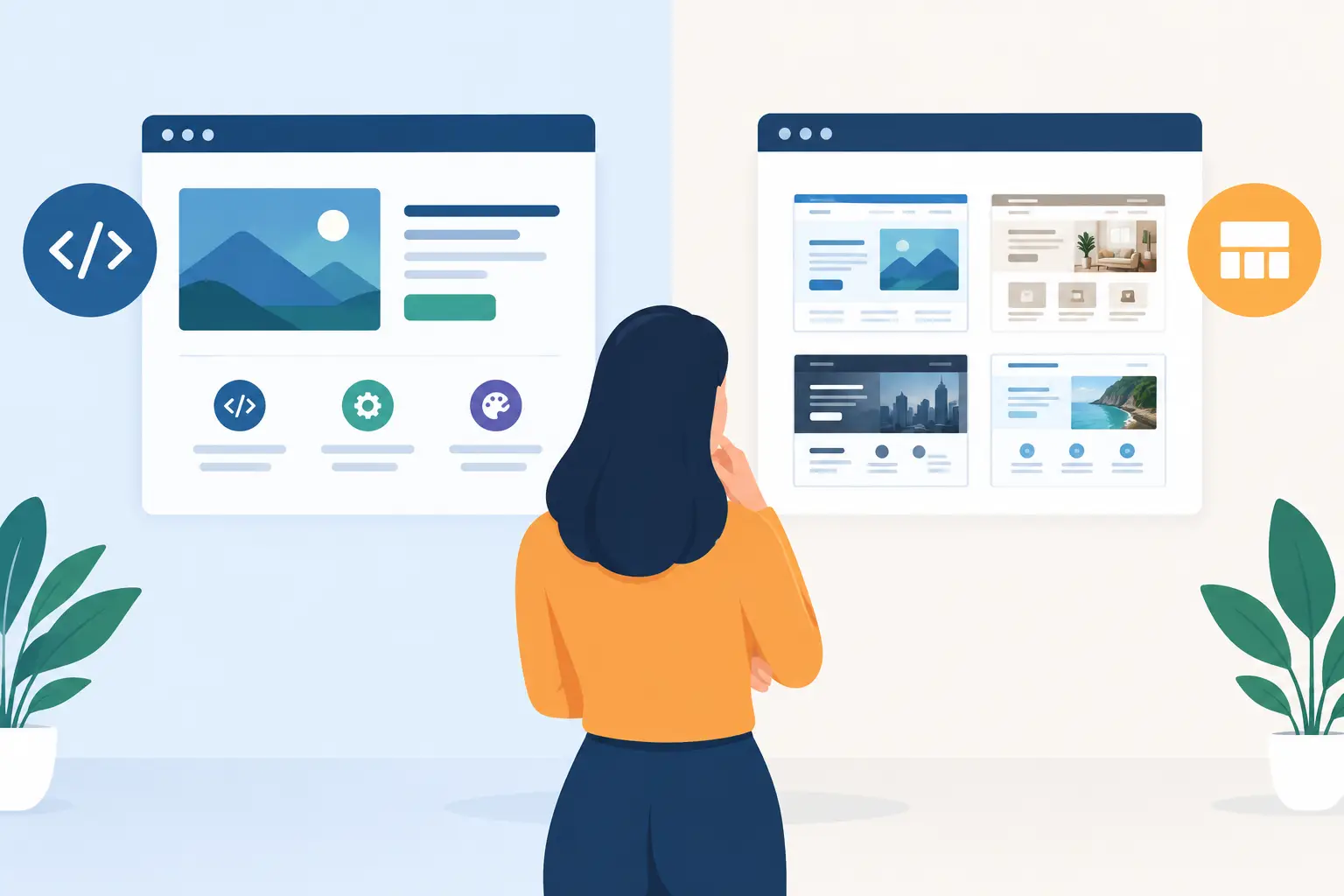
This is where a lot of buyers get tripped up. A local trades business needing a clean, credible site with proper contact flows does not need the same setup as a startup founder building a SaaS product. Both need quality, but the architecture, timelines and technical decisions will be very different.
If you need a marketing website, you are looking for clear design, fast load times, strong mobile performance and a build that is easy to maintain. If you need a web app, the conversation shifts towards database structure, user roles, API integrations, billing, state management and security. If you need a browser extension, you also need platform-specific knowledge, store submission experience and a proper understanding of how extensions interact with web apps and user workflows.
A developer who says yes to everything without drawing these distinctions is usually simplifying the job too much. Good scoping is often a sign of good delivery.
How to assess a web developer Wales businesses hire
Start by looking at what they have actually built. Portfolio matters, but not just in a visual sense. You want to know whether they have delivered the type of thing you need. A sleek landing page does not prove they can build a secure dashboard. Equally, a strong technical app portfolio does not automatically mean they understand branding, layout and conversion.
Ask practical questions. Who handles design? What does the build stack look like? How do they approach deployment? What happens after launch if something needs adjusting? Can they work with custom requirements, or are they mostly configuring templates? The answers should be specific and plain, not vague or padded out with buzzwords.
Responsiveness also matters more than people think. Freelance developers are often chosen because they are more direct and easier to work with than a larger agency. That only counts if communication is clear. You should know what is being built, what stage it is at, what decisions need your input and what risks have been identified early.
Design and development should not be fighting each other
One of the most common project issues is a split between visual design and technical implementation. A design may look sharp, but if it ignores content structure, performance or responsiveness, the build suffers. On the other side, a technically sound site can still underperform if the interface feels generic, cluttered or off-brand.
The strongest freelance setups tend to combine both disciplines. That does not mean every project needs elaborate branding work. It means the design should support the job the site or product needs to do, and the development should honour that without turning the interface into a compromise.
For business owners, this is often the difference between a site that simply exists and one that helps generate leads, support customers or reduce friction in the buying journey. Good design is not decoration. Good development is not just functionality. When both are handled together, the final product is usually cleaner, faster and easier to use.
Why local can help, even if delivery is remote
Choosing a web developer in Wales can be useful for reasons beyond postcode. There is practical value in working with someone who understands the pace and needs of local businesses, while still being comfortable delivering for national and international clients. That mix tends to create a more grounded service - commercially aware, technically capable and less bloated than a big-agency process.
That said, local is not automatically better. If your project is highly specialised, the better choice may be the person with the exact technical experience you need, regardless of whether they are ten miles away or working remotely. The question is not simply location. It is fit, communication and evidence they can ship the job end to end.
For example, if your brief includes a custom client portal, internal automation, subscription billing and third-party integrations, you are not buying a standard small-business website. You need someone comfortable making architectural decisions, handling edge cases and delivering production-grade work without losing sight of the interface.
Red flags worth spotting early
If pricing is suspiciously low, there is usually a reason. Sometimes that reason is inexperience. Sometimes it is a reliance on off-the-shelf themes and plugin stacks that can become fragile later. Sometimes it means the quote covers the build itself but not testing, deployment, revisions or support after launch.
Another warning sign is unclear ownership. If you do not know where the site will be hosted, who controls the codebase, how updates will be handled or what happens if you need another developer later, ask before anything starts. You should not feel locked into a black box.
Be cautious of overpromising too. Not every project needs a custom system from scratch, and not every business problem should be solved with a heavy web app. A capable developer should be able to tell you when a lighter solution is enough, and when investing in a more tailored build will pay off.
What a strong project usually looks like
A strong project starts with proper scoping. The brief gets tightened, priorities are agreed, and the build is shaped around real business requirements rather than guesswork. From there, the process should move through design direction, development, integration work, testing and launch in a way that feels controlled rather than chaotic.
The details matter. Page speed matters. Form handling matters. Analytics matters. Cache behaviour matters. So do the practical things clients often discover too late, such as editing content, managing users, handling billing events or tracing what happens when an integration fails.
This is where an experienced freelance partner can be a genuine advantage. Someone like Zak Furness, working end to end from design through deployment, can often keep the process tighter and more accountable than a fragmented team where responsibility is spread across multiple people. That does not make freelance the right answer for every project, but for many small businesses and founders it is a strong fit.
Choosing for the next two years, not just next month
The best time to think about scalability is before you need it. Not every business needs an elaborate system on day one, but your website or product should not box you in after launch. If you plan to add gated content, paid subscriptions, customer logins, automation or reporting later, those possibilities should shape the early technical decisions.
That does not mean overbuilding. It means building with care. A sensible stack, clean architecture and clear ownership give you room to grow without turning a successful launch into a rebuild six months later.
If you are comparing options, look past surface-level polish and ask who you would trust to still be useful when the project gets more demanding. A good web developer Wales businesses return to is not just there to get something live. They help you make better decisions before the expensive ones are irreversible.
The right build should feel like it removes friction from the business, not add another system you have to work around.